Why Your Rain Jacket Stops Working, and How to Bring It Back
Quick Answer: What usually fails is not the waterproof membrane but the durable water repellent finish on the outer fabric. When that wears off, the face fabric absorbs water instead of beading it, the fabric “wets out”, and even though water is not passing through, your body vapour cannot get out so you get wet from the inside and conclude the jacket has failed. The fix is to wash it properly and reapply a DWR treatment, which restores most jackets to close to new performance.
Counterintuitively, the most common cause of a jacket that seems to leak is that it is dirty.
Here is what is actually happening and the exact procedure.

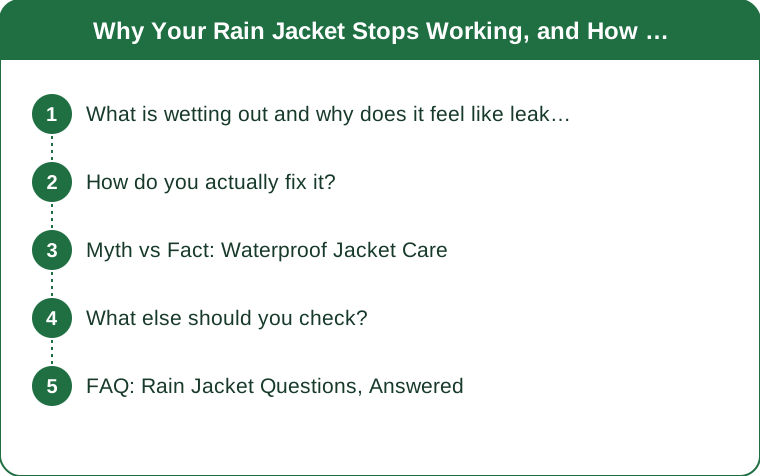
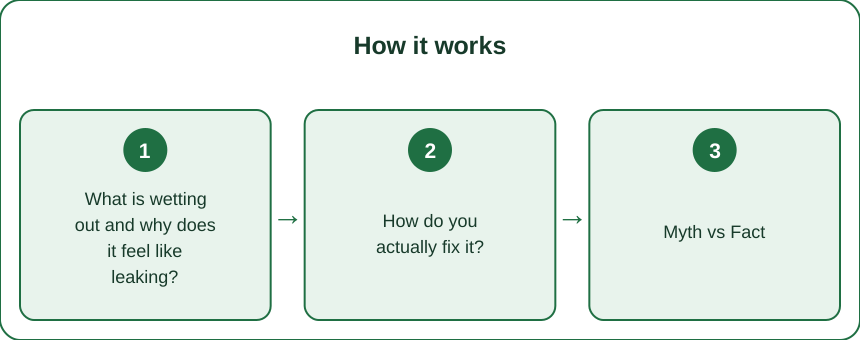
What is wetting out and why does it feel like leaking?
A waterproof breathable jacket has two systems. A membrane that blocks liquid water while allowing vapour through, and a treated outer fabric that makes water bead and roll off before it reaches the membrane.
The outer treatment wears off long before the membrane does. Abrasion from a pack, body oils, detergent residue, dirt and general use all degrade it, and it is the sacrificial layer by design.
Once it is gone, the face fabric saturates. The membrane is still blocking liquid water, so technically nothing is leaking. What has changed is what happens on the outside.
A saturated face fabric kills breathability. Vapour transfer depends on a difference in vapour pressure across the membrane, and a soaked outer fabric collapses that difference. Your sweat now has nowhere to go.
So you get wet from the inside and it feels identical to leaking. This is the crux of the whole issue, and it is why people replace jackets that did not need replacing.
It also makes you cold. A saturated outer fabric is a layer of water held against your insulation, which conducts heat away far faster than dry fabric, so a wetted-out jacket is both clammy and cold.
And the visual tell is straightforward. Watch the fabric in rain: beading means the treatment is working, dark patches spreading means it is not. The shoulders and forearms go first because they take the most abrasion.
How do you actually fix it?
Wash it first, properly, and this alone fixes many jackets. Dirt and body oils block the treatment mechanically, so a clean jacket often beads again with no new product at all.
Use a technical wash, not ordinary detergent. Standard detergents leave surfactant residue that actively attracts water and defeats the DWR. This is the single most common reason a jacket stops working prematurely.
Rinse the machine first if you use detergent normally. Run an empty rinse cycle to clear residue from the drum, which sounds fussy and genuinely matters.
Wash warm, gentle cycle, no fabric softener ever. Softener coats the fabric and destroys water repellency completely.
Then heat it. Most DWR finishes are reactivated by heat: a tumble dry on low for twenty minutes, or a warm iron with a cloth between if the care label allows. Many jackets that seem finished simply need washing and heating.
If it still does not bead, reproof it. Wash-in treatments are easy and coat the whole garment including the inside; spray-on treatments only coat the outside, which preserves the inner wicking and is generally the better choice for a breathable running jacket.
Then heat it again to cure the treatment. Skipping this step is why reproofing sometimes seems not to work.
And check the care label throughout. Some fabrics and membranes have specific requirements, and following them costs nothing.

Myth vs Fact: Waterproof Jacket Care
Myth: Washing a waterproof jacket ruins it. Fact: The opposite. Dirt and oils are a leading cause of failure, and most jackets need washing far more often than they get it.
Myth: If it soaks through, the membrane has failed. Fact: Membranes usually outlast the outer treatment considerably. Wetting out feels identical and is fixable.
Myth: Any detergent is fine if you rinse well. Fact: Ordinary detergent leaves hydrophilic residue that actively attracts water. Use a technical wash.
Myth: You cannot tumble dry technical fabrics. Fact: Most modern ones tolerate and require low heat to reactivate the DWR. Check the label, then use it.
Myth: A more expensive jacket does not need reproofing. Fact: DWR is sacrificial on every jacket at every price. More expensive usually means better fabric, not permanent treatment.
Myth: Breathability means you will stay dry inside. Fact: In heavy rain at high effort, no jacket keeps up with sweat output. Managing pace, venting and layering matters as much as the jacket does.
What else should you check?
Taped seams. Peeling seam tape on the inside is a genuine failure and it is repairable with seam sealant on small areas. Look along the shoulders and under the arms.
Zips and storm flaps. A water-resistant zip that has stiffened or picked up grit lets water through. Clean it and use a zip lubricant.
Cuffs and hem. These are where water enters most jackets in practice, and worn elastic or a broken adjuster matters more than fabric performance.
Hood adjusters. A hood that no longer holds shape channels water down your neck, which people attribute to the jacket leaking.
Abrasion points. Shoulders under a pack strap and the forearms wear first. These are the areas to spray-treat between full reproofs.
And be realistic about lifespan. DWR needs renewing every few months of regular use, and washing every ten to twelve wears is normal for technical outerwear rather than excessive.
FAQ: Rain Jacket Questions, Answered
How often should I wash a waterproof jacket?
Every ten to twelve wears with regular use, or whenever water stops beading. Dirt and oils are a leading cause of apparent failure.
Can I use normal detergent?
No. It leaves residue that attracts water and defeats the repellent finish. Use a technical wash designed for waterproof fabrics.
Wash-in or spray-on reproofer?
Spray-on for breathable running jackets, since it treats only the outside and leaves the inner wicking surface alone.
Do I have to tumble dry it?
Heat reactivates most DWR finishes, so a low tumble dry or a warm iron through a cloth makes a real difference. Check the care label.
How do I know if it is the membrane or the DWR?
Watch it in rain. Water beading means the DWR works; dark spreading patches mean it has worn off. Membrane failure is much rarer.
Will I ever stay completely dry running in heavy rain?
No. At running effort in sustained rain, sweat output exceeds what any membrane can transfer. The goal is warm and manageable, not dry.
TL;DR:
- Jackets usually fail at the outer water-repellent finish, not the waterproof membrane.
- When the outer fabric wets out, breathability collapses and you get soaked from the inside.
- Wash it with a technical wash; dirt and detergent residue are leading causes of failure.
- Never use fabric softener, and heat the jacket afterwards to reactivate the finish.
- Spray-on reproofer suits breathable running jackets better than wash-in.
- Check seam tape, zips, cuffs and hood adjusters before concluding the jacket is finished.
Most jackets that seem to have failed just need an hour, a wash and some heat.
Keep Reading
This article is for general informational and styling purposes only. Fit, sizing, and product availability may vary.