Why Your Heart Rate Reads High on Rain Runs at the Same Pace
Quick Answer: Two things happen at once. Physiologically, wet gear and cool rain increase the thermoregulatory and mechanical cost of running slightly - heavier clothing, more effort per stride, and a body working to maintain temperature. Technologically, optical wrist sensors lose accuracy when water sits between the sensor and skin, which commonly produces false readings and cadence lock. If the number looks wrong and your effort feels normal, suspect the sensor first. A chest strap eliminates the ambiguity entirely.
Runners routinely conclude they are unfit after a rainy week.
Often they are just reading bad data.
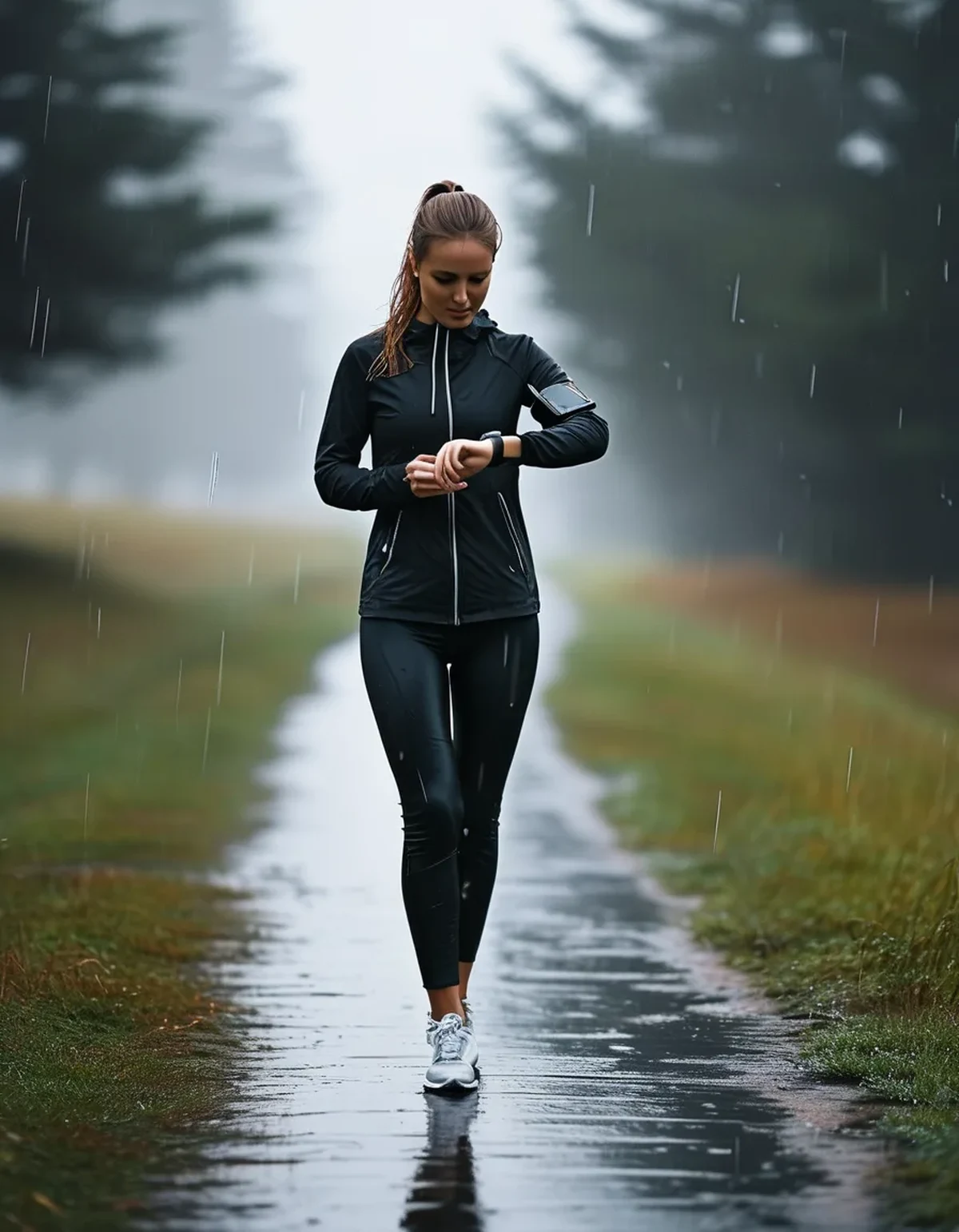
Is my heart rate actually higher in the rain?
Somewhat, yes - but usually less than the watch suggests.
Wet clothing adds weight and friction. Soaked shoes gain meaningful weight, and wet fabric clings and restricts movement slightly. Carrying extra weight at the foot is metabolically expensive - added mass at the extremity costs disproportionately more than the same mass at the torso.
Thermoregulation costs something. In cool rain, your body works to maintain core temperature while wet skin and evaporative cooling are pulling heat away. Peripheral blood vessels constrict to conserve heat, which can slightly raise heart rate at a given workload.
Wet ground reduces energy return. A soaked trail or a puddled path absorbs more energy per step than a dry one, so the same pace costs more effort - this is real and often larger than people assume on soft surfaces.
And there is a stress response. Cold and wet are mild stressors. A modest rise in circulating adrenaline raises heart rate at rest and during exercise, independent of the actual work being done.
All told, expect a genuine increase of a few beats per minute at a given pace in cool rain. If your watch is showing 15 or 20 beats higher, the extra is almost certainly measurement error rather than physiology.
Why do wrist sensors fail specifically in the rain?
Because they measure light through skin, and water changes the optical path.
Optical heart rate works by shining light into the skin and measuring how much is reflected back as blood volume changes with each pulse. It depends on a consistent, close contact between the sensor and the skin.
Water between the sensor and the skin breaks that. A film of water scatters and refracts the light, weakening the signal the sensor is trying to read. Sweat does the same thing, which is why the problem also appears on hot humid days.
The strap also loosens when wet. Wet skin and a wet band mean the watch slides, and movement between the sensor and skin is the primary source of optical error. A loose watch on a wet arm produces almost meaningless data.
Then there is the classic failure mode: cadence lock. When the signal is too weak to read, the algorithm can lock onto your arm swing frequency instead of your pulse and report a number matching your step rate. If your heart rate reading is suspiciously close to your cadence - around 170 to 180 for many runners - that is what has happened.
Cold makes it worse. Cold skin means reduced peripheral blood flow, which weakens the optical signal further. A cold wet arm is the worst possible condition for a wrist sensor, and it is exactly the condition of a fall rain run.
The signature of bad data: readings that jump abruptly, sit implausibly high or low, or track your cadence. Real heart rate changes gradually.
What should I do about it?
Fix the measurement first, then adjust the training.
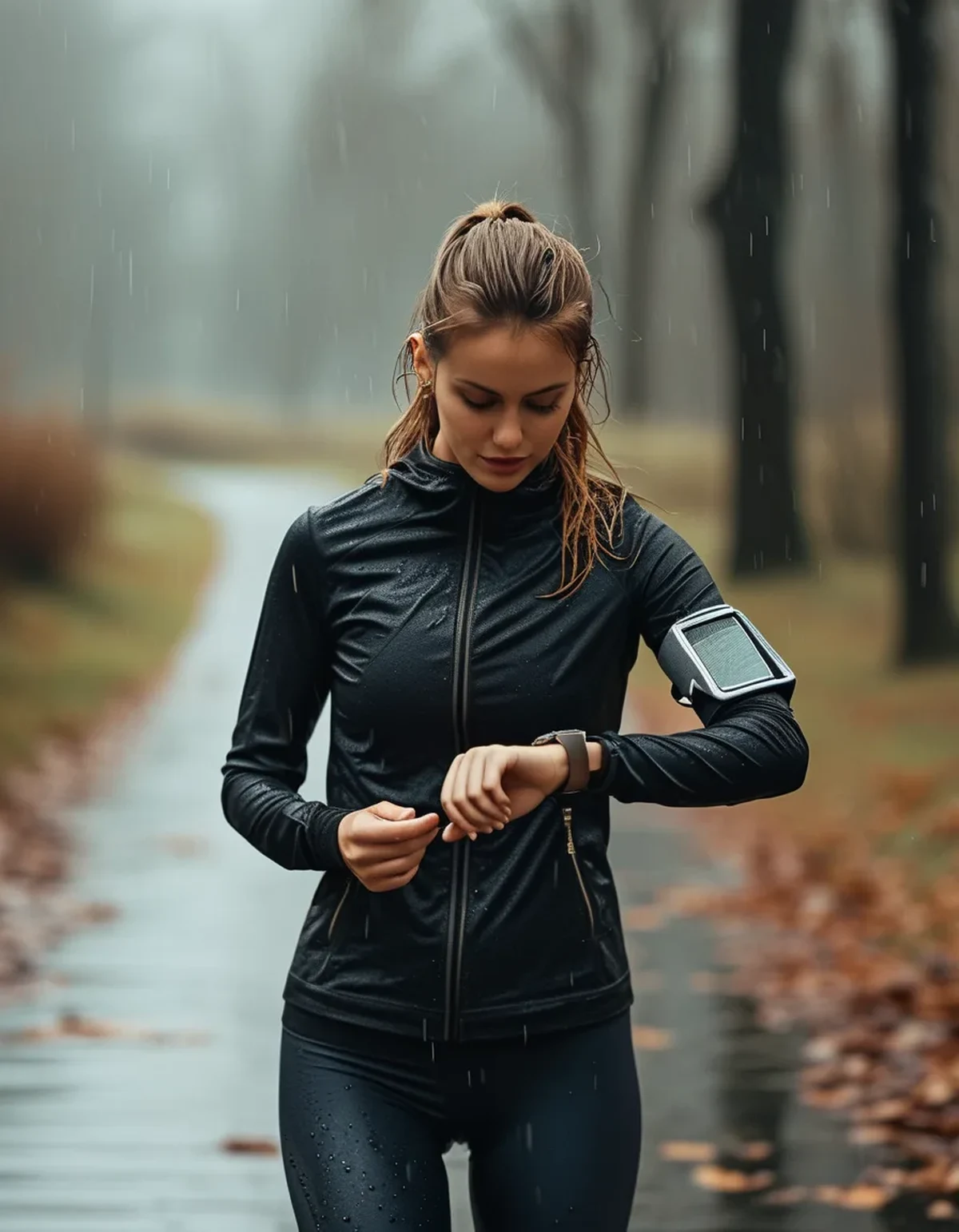
Wear the watch tighter and higher than usual in the rain. A finger’s width above the wrist bone, on the flatter part of the forearm where there is less movement. Tighten one notch beyond comfortable - you can loosen it after the run.
Dry the sensor and your skin before you start. It sounds trivial and it genuinely helps for the first portion of the run, which is when the reading tends to establish itself.
Use a chest strap for anything where the data matters. A chest strap measures electrical activity rather than optical signal and is essentially unaffected by rain. If you do structured training with heart rate zones, this is the fix - not a workaround.
Wear the watch under the sleeve rather than over it. This keeps the sensor drier and warmer, which addresses two problems at once.
Then adjust how you train in the rain. Run by effort rather than by heart rate on wet days. Perceived exertion is unaffected by wet skin, and it is a genuinely reliable guide. If it feels like an easy run, it is an easy run, regardless of the number.
And do not adjust your fitness assessment based on rainy-week data. Compare like with like - dry runs to dry runs. A month of rain-affected heart rate data will look like fitness loss and will not be.
Myth vs Fact: Heart Rate in the Rain
Myth: A high heart rate reading in the rain means you are working harder. Fact: You are working slightly harder and your sensor is reading badly. Separating the two requires either a chest strap or attention to perceived effort.
Myth: Optical sensors have gotten good enough that this is solved. Fact: They have improved considerably at steady effort and remain unreliable when wet, cold, or during rapidly changing intensity. The physics of the measurement has not changed.
Myth: Cold weather lowers your heart rate at a given pace. Fact: In genuinely cold conditions, heart rate at a given pace is often slightly higher, not lower, because of the added thermoregulatory demand. In mild conditions the effect is small either way.
Myth: If the number looks wrong, restart the watch. Fact: Repositioning and tightening the watch fixes far more cases than restarting does, because the problem is contact, not software.
Myth: Rain runs are not worth doing if the data is unreliable. Fact: The data is one small part of a run. Running in varied conditions builds adaptability, and effort-based running is a skill worth having for exactly the days when the numbers fail.
FAQ: Rain Run Questions, Answered
How much higher should my heart rate genuinely be?
A few beats per minute at the same pace in cool rain is typical, driven by wet gear, surface, and thermoregulation. Anything above roughly ten beats is worth treating as suspect data until confirmed with a chest strap.
Will a chest strap chafe more in the rain?
It can, because wet fabric and skin increase friction. A small amount of anti-chafe balm under the strap solves it, and the strap should be snug rather than tight - a loose strap slides and chafes more.
Should I skip runs when it rains?
No reason to for a normal rain. The exceptions are lightning, ice, and genuinely cold heavy rain, where hypothermia risk is real over a long run. Dress for the temperature after you are wet, not before.
TL;DR:
- Real effect: a few extra beats from wet gear, soft ground, and thermoregulation.
- Larger apparent effect: optical sensors fail on wet, cold skin and can lock onto your cadence instead of your pulse.
- If the reading is near your step rate, it is cadence lock.
- Wear the watch tighter and higher, under a sleeve - or use a chest strap when the data matters.
- Run rainy days by effort, and compare fitness across dry runs only.
Next wet run, move the watch an inch higher and one notch tighter before you start.
Keep Reading
This article is for general informational and styling purposes only. Fit, sizing, and product availability may vary.