Why a Light Drizzle Chills You More Than a Downpour Does
Quick Answer: Heavy rain gets you soaked quickly and you dress for it. Light drizzle wets you slowly, so you underdress, run longer, and never trigger the decision to add a layer. Meanwhile evaporation from continuously damp fabric cools you steadily for the whole run. Dress for drizzle as though it were 10F colder than the thermometer says, wear a wind-resistant layer rather than a fully waterproof one, and pay particular attention to hands and head.
You have run in proper rain and been fine. You go out in drizzle and finish genuinely cold.
The milder condition is the more dangerous one, and here is why.

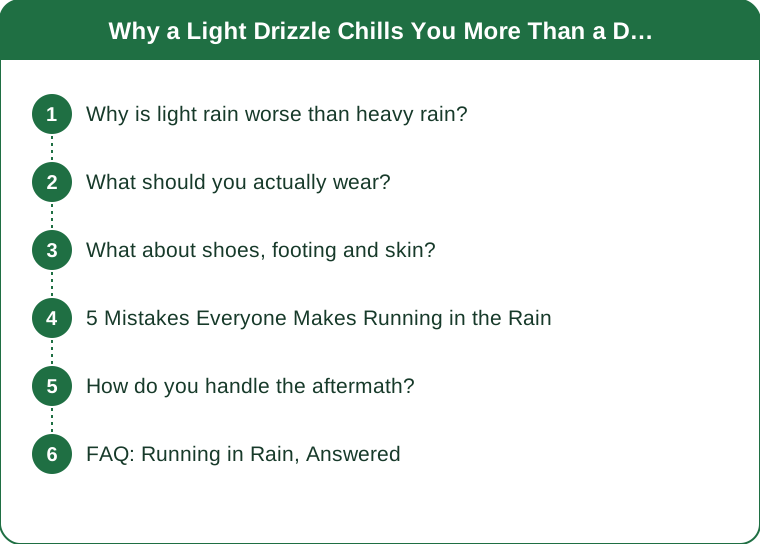
Why is light rain worse than heavy rain?
Heavy rain forces a decision. You see it, you dress for it, you shorten the run, or you go inside. Drizzle produces none of those responses.
Drizzle wets clothing continuously without saturating it, which is the ideal condition for sustained evaporative cooling - there is always moisture available and always air moving through the fabric.
Saturated clothing in heavy rain actually evaporates less per unit time than damp clothing does, because evaporation happens at the surface and water-logged fabric holds it in.
Drizzle usually comes with wind, and wind is the multiplier on all evaporative cooling.
Runs are longer in drizzle, because it is tolerable, so the total exposure is greater.
And the temperature is often in the worst range - 40F to 55F is the classic problem zone, mild enough to underdress and cold enough to matter.
Wet skin loses heat far faster than dry skin, and the effective temperature of a damp windy 50F is well below what the thermometer reports.
What should you actually wear?
Dress as though it were about 10F colder than the reading, which is the single most useful heuristic here.
Choose a wind-resistant layer over a fully waterproof one for anything but heavy rain. Waterproof shells trap sweat, and in drizzle you get wet from the inside instead.
A synthetic or merino base layer, never cotton. Cotton holds water against the skin, loses all insulating value wet, and is the single worst choice available.
A cap with a brim keeps rain off your face and out of your eyes, which is a comfort issue that becomes a route-safety issue in poor light.
Gloves matter more than you expect - hands have high surface area, they are unprotected and wet, and cold hands make the whole run feel worse than it is.
Avoid overdressing on the torso, which produces sweat that then does exactly what the rain is doing.
And accept being slightly cool for the first five minutes, which is the correct starting state. Comfortable at the start means overdressed at mile two.
What about shoes, footing and skin?
Wet shoes are unavoidable and mostly a comfort issue, not a performance one. Drainage matters more than waterproofing for running shoes, since water enters at the ankle regardless.
Waterproof running shoes trap water once it gets in, which is why most experienced runners do not use them in warm rain and reserve them for cold.
Wool or synthetic socks retain warmth when wet; cotton socks are the leading cause of blisters in rain.
Blister risk rises substantially when wet, so anti-chafe balm on the feet and toes is worth the thirty seconds.
Chafing anywhere is worse in the wet. Apply balm to the usual points before going out rather than discovering them at mile four.
Painted lines, metal covers and wet leaves are the actual slip hazards - far more than the wet surface itself. Shorten your stride on them.
And visibility drops sharply in rain, for you and for drivers. Reflective gear and a light are more important in daytime drizzle than most runners assume.

5 Mistakes Everyone Makes Running in the Rain
Wearing a fully waterproof shell for a light drizzle. It traps sweat, and you arrive home just as wet with the added disadvantage of having overheated for the first half.
Wearing cotton anywhere. A cotton t-shirt or cotton socks in rain is the fastest route to a cold, blistered run. This is the one gear rule with no exceptions.
Skipping the anti-chafe balm. Everything that chafes occasionally chafes reliably when wet, and it is discovered too late every single time.
Underdressing because the temperature reading looks fine. 50F and dry and 50F and drizzly are different conditions by roughly ten degrees of felt temperature.
Standing around afterwards in wet clothes. The post-run chill is worse after a wet run than a dry one because the wet layer keeps cooling. Change within five minutes, and put the dry layer in the car before you leave.
How do you handle the aftermath?
Change out of everything wet within five minutes, which prevents nearly all of the post-run chill.
Stuff wet shoes with newspaper and dry them at room temperature. Never dry running shoes on a radiator or with a hair dryer - heat damages the adhesives and warps the midsole.
Remove the insoles to dry separately, which halves the drying time.
Rotate two pairs of shoes if you run frequently in wet weather, because shoes need roughly 24 hours to dry properly and running in wet shoes accelerates their breakdown.
Rinse salt and grit off technical fabrics even if you do not wash them fully every time.
Check your feet for hot spots after a wet run, since blisters form faster and are easier to catch early.
And leave a dry layer in the car for every wet-weather run, which is the habit that makes the whole thing sustainable. This is general information, not medical advice.
FAQ: Running in Rain, Answered
Why do I get colder in drizzle than in heavy rain?
Because damp clothing evaporates more effectively than saturated clothing, drizzle usually comes with wind, you underdress for it, and you run longer. All four push the same direction.
Should I wear a waterproof jacket?
For heavy rain, yes. For drizzle, a wind-resistant breathable layer is usually better - fully waterproof shells trap sweat and you end up wet anyway.
Are waterproof running shoes worth it?
In cold conditions, sometimes. In mild rain they trap water that enters at the ankle, which makes things worse. Most runners are better served by good drainage and wool socks.
How do I stop blisters when running in the rain?
Wool or synthetic socks, anti-chafe balm on the toes and heels, and shoes that fit properly. Cotton socks are the leading cause.
Is it safe to run in the rain?
Generally yes, with attention to visibility and footing. Painted lines, metal covers and wet leaves are the real slip hazards. Lightning is a genuine reason to go inside.
How do I dry my running shoes?
Remove the insoles, stuff with newspaper, dry at room temperature. Never use direct heat - it damages adhesives and warps the midsole.
TL;DR:
- Drizzle keeps clothing damp rather than saturated, which is the ideal state for continuous evaporative cooling.
- You underdress for drizzle and run longer in it - both work against you.
- Dress as though it were 10F colder than the reading.
- Choose wind-resistant over fully waterproof for anything but heavy rain; shells trap sweat.
- No cotton anywhere, especially socks. Wool or synthetic only.
- Apply anti-chafe balm before you leave; everything that chafes occasionally chafes reliably when wet.
Leave a dry layer in the car and change within five minutes. This is general information, not medical advice.
Keep Reading
This article is for general informational and styling purposes only. Fit, sizing, and product availability may vary.