Why Visibility Drops Faster Than Expected During a Rainy Run
Quick Answer: Rain scatters and refracts light in ways clear conditions don’t, while also fogging glasses and reducing contrast on wet road surfaces, which together reduce both a runner’s ability to see hazards and a driver’s ability to see the runner — this combined visibility drop happens faster and more severely than most runners intuitively expect from rain alone, making proactive visibility gear more important on rainy runs than on comparable low-light dry runs.
Rain doesn’t just make a run wetter — it meaningfully compounds the usual low-visibility risks of early morning or evening running in ways worth planning for specifically.
Why does rain reduce visibility so much more than just the water itself falling would suggest?
Raindrops scatter and refract light passing through them, which reduces contrast and can create glare from streetlights or headlights, making it genuinely harder to perceive depth and distance accurately. Wet road surfaces also reflect light unevenly, sometimes creating glare and sometimes creating unexpectedly dark, hard-to-read patches, both of which reduce a runner’s ability to spot curbs, potholes, or other hazards compared to the same route dry.
Does rain actually make it harder for drivers to see a runner, not just the reverse?
Yes, significantly — a driver’s windshield wipers create brief visibility gaps, rain on the windshield scatters oncoming light, and reduced ambient light during overcast rainy conditions all combine to reduce how easily a driver spots a runner, especially one in dark or non-reflective clothing. This compounding effect is part of why rainy-day running visibility gear matters even during daytime hours, not just at dawn or dusk specifically.
Does fogging on glasses or sunglasses meaningfully add to this visibility problem for the runner themselves?
Yes — body heat and breath combined with rain moisture commonly fog prescription glasses or sunglasses during a run, and this fogging can build gradually enough that a runner doesn’t immediately notice how much their own visibility has degraded. Anti-fog treatments or fully wraparound running-specific eyewear designed to manage moisture reduce this specific, often underestimated visibility drop.
What specific gear changes make the most difference for rainy-run visibility, beyond a general rain jacket?
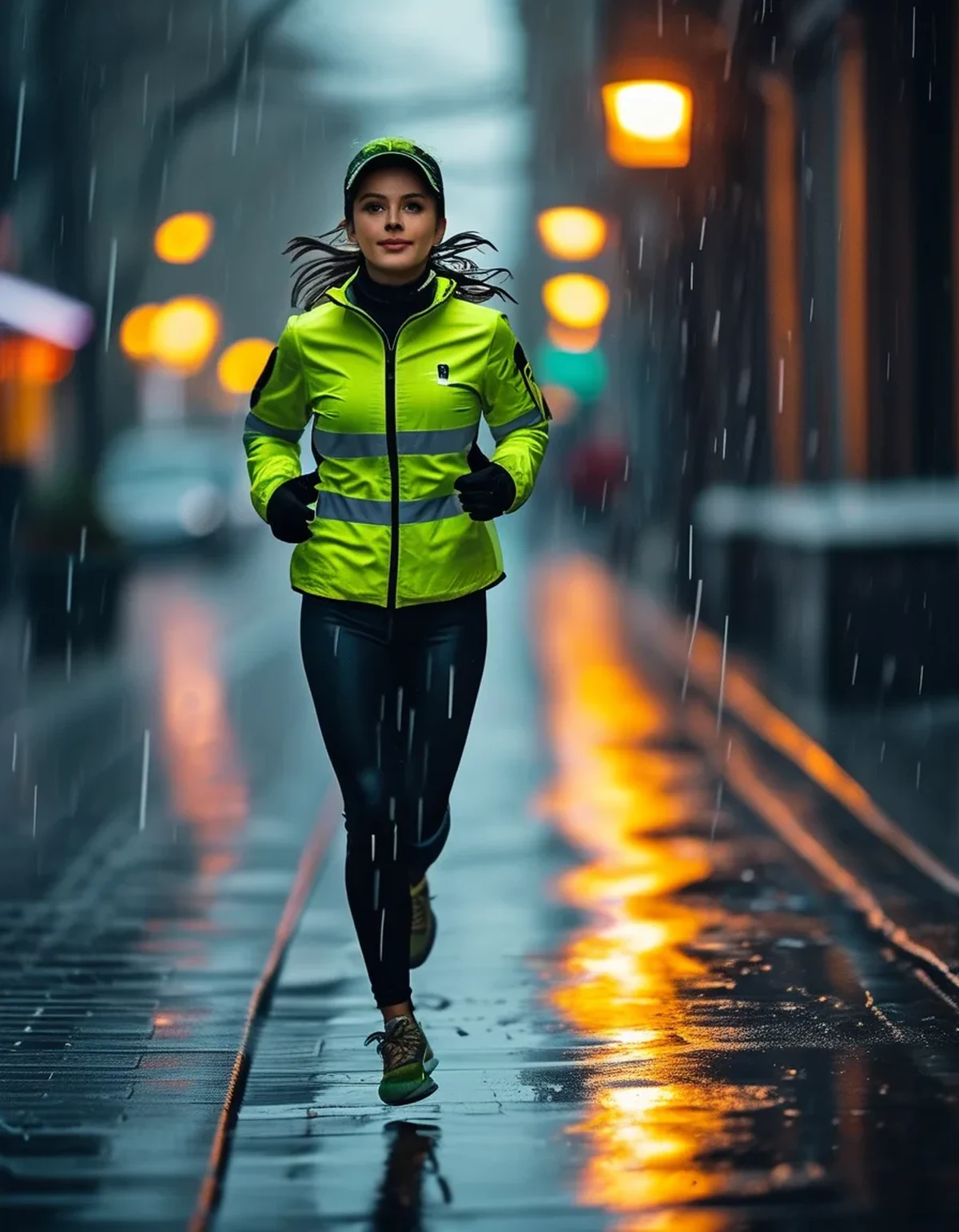
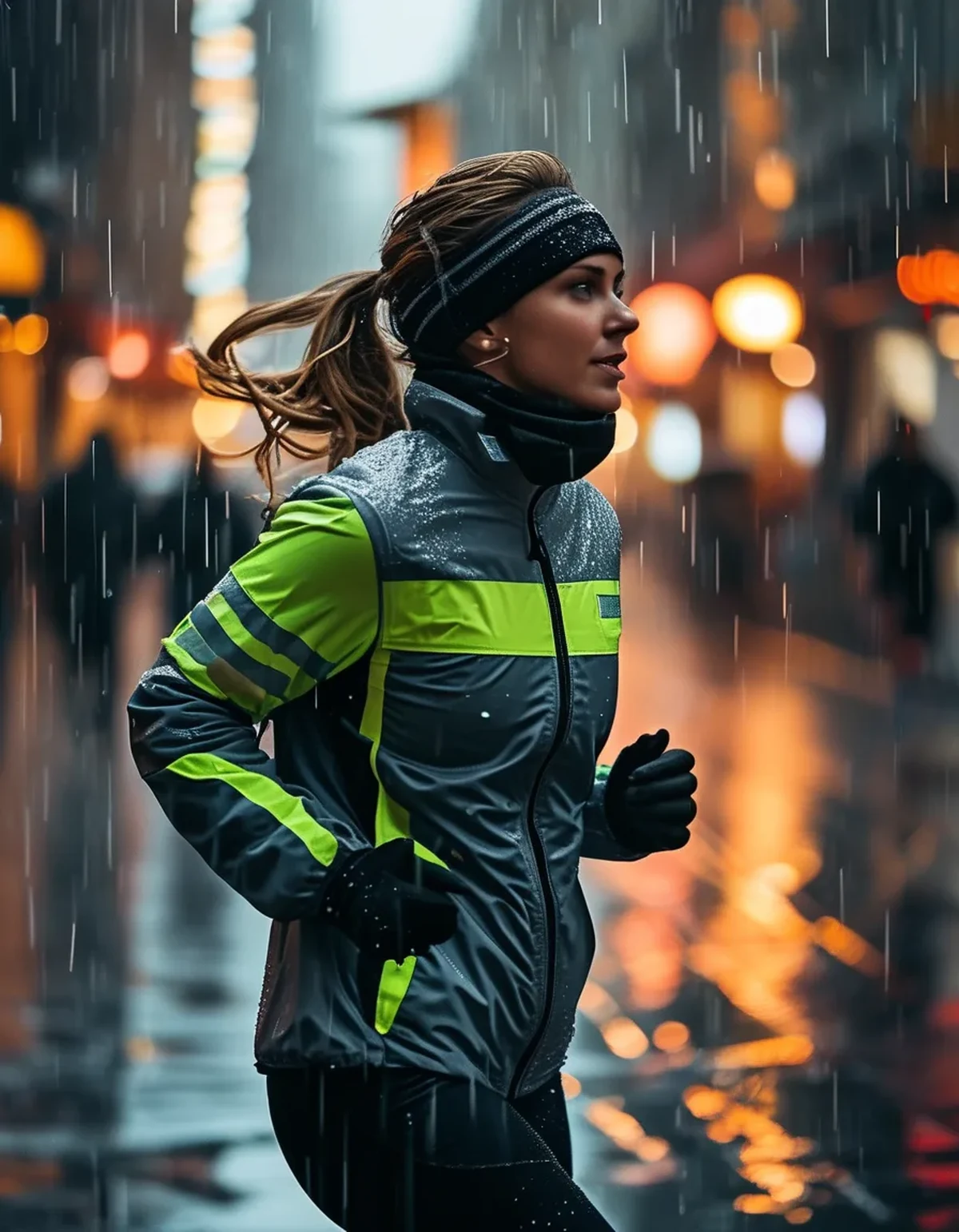
A high-visibility or reflective jacket rather than a standard dark running jacket, a running-specific cap with a brim to keep rain out of the eyes, and reflective accents on shoes or arms all directly address the compounded visibility challenge rain creates. Choosing brighter, higher-contrast colors specifically for rainy runs, even if a runner typically prefers darker gear on clear days, is a simple, high-impact adjustment.
5 Mistakes Runners Make With Rainy-Day Visibility
Wearing the same dark running gear used on clear days — rain’s compounded visibility reduction calls for brighter, more reflective choices specifically.
Not accounting for windshield wiper visibility gaps — a driver’s view is intermittently blocked in ways it isn’t on a clear day.
Ignoring glasses fogging until it’s already significant — checking and wiping regularly prevents it from silently degrading visibility over a run.
Running familiar routes on autopilot despite reduced visibility — familiarity doesn’t compensate for genuinely reduced ability to spot new hazards.
Skipping reflective gear because it’s daytime — rain’s ambient light reduction affects daytime visibility more than most runners expect.
FAQ: Rain Running Visibility, Answered
Are reflective gear elements actually effective during daytime rain, or mainly useful at night?
Reflective elements provide some benefit anytime ambient light is reduced, including overcast daytime rain, though high-visibility bright colors matter comparatively more than pure reflectivity during daylight hours.
Does running against traffic versus with traffic matter more during rainy conditions specifically?
Running facing traffic remains generally recommended in most conditions, and this guidance becomes more important during rain, since it gives a runner more reaction time to a driver whose visibility is also compromised.
Is it worth avoiding roads with poor drainage or standing water for visibility reasons, not just comfort?
Yes — standing water can obscure curb edges, potholes, and uneven pavement that would otherwise be visible, making route choice a meaningful visibility factor during rain, not purely a comfort one.
TL;DR:
- Rain scatters light and reduces contrast, making hazards harder for runners to see clearly
- Windshield wipers and rain-scattered light also reduce how well drivers can see a runner
- Fogging glasses add a runner-specific visibility problem that builds gradually and often goes unnoticed
- Bright, reflective gear matters even during daytime rain, not just at dawn or dusk
Rain compounds visibility risk for both runners and drivers more than intuition suggests, making proactive gear choices a genuinely important safety adjustment, not just a comfort preference.
Keep Reading
This article is for general informational and styling purposes only. Fit, sizing, and product availability may vary.