Why the Injury Risk People Associate With Running in the Rain Actually Comes From Worn-Out Gear
You slipped on a rainy run. Maybe caught yourself, maybe didn’t. Either way, the conclusion formed immediately: rain is slippery, I should be more careful in the rain.
Reasonable. Also probably wrong. The rain didn’t create that problem — it just ran a test your shoes had been quietly failing for weeks.
Quick Answer: Worn shoe tread that still grips adequately on dry pavement can lose most of its remaining traction the moment a surface is wet. The wear was already there; dry conditions were forgiving enough to hide it. Because the slip happens on a rainy day, the rain gets blamed instead of the shoes. Check tread depth and pattern wear specifically before a forecasted wet run, rather than judging your shoes by how they’ve felt on dry days.

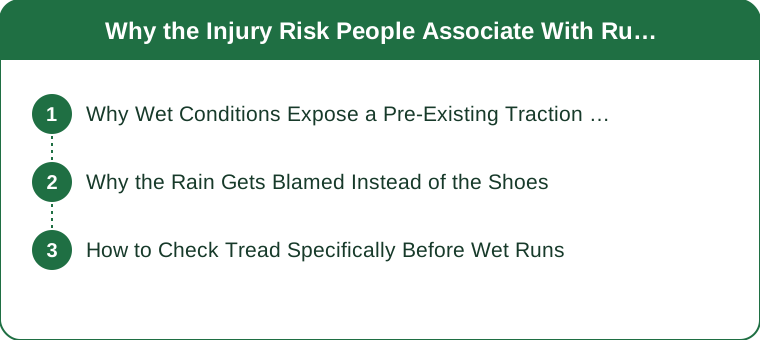
Why Does Rain Expose a Traction Problem That Was Already There?
Because dry pavement and wet pavement grip through different mechanisms, and only one of them needs tread.
On a dry surface, grip comes largely from direct friction between rubber and ground. That works with a fairly smooth outsole — which is exactly why worn shoes feel completely fine on a dry day. Nothing is wrong with your perception; they genuinely are gripping.
Add water and the situation changes. Now there’s a thin film between rubber and ground, and the job of tread is to channel that water out of the way so the rubber can still make contact. Tread grooves are drainage. When they’ve worn down, the water has nowhere to go, and you’re effectively running on a lubricated surface.
That’s why the failure is so abrupt. It isn’t that wet shoes grip somewhat less — it’s that a specific function (water evacuation) either works or doesn’t, and worn tread has lost it entirely while the dry-weather friction still feels normal.
So rain isn’t adding risk so much as stress-testing a variable dry conditions never tested. Your shoes have been in this state for a while. You just hadn’t been given the information.
Worth noting the compounding factors: painted road markings, metal covers, wooden boardwalks, and wet leaves are all dramatically slipperier than wet asphalt, and they’re where most rain-run slips actually happen.

Why Do We Blame the Rain Instead of the Shoes?
Because the rain is the thing that changed.
You ran that route in those shoes on Tuesday and nothing happened. You ran it on Thursday in the rain and slipped. One variable visibly differed, so the rain gets the blame. It’s a completely natural inference and it’s the wrong one, because the dry run wasn’t evidence the shoes were fine — it just wasn’t a test.
Two things reinforce the mistake:
Dry days generate no data. Non-events are invisible. You have no record of “shoes performed adequately on a surface that didn’t challenge them,” so you have nothing to update on.
Rain is a well-known hazard. “Wet surfaces are slippery” is common knowledge, so it makes a satisfying explanation and the investigation stops there.
The cost of the misattribution is practical: it produces the wrong response. People conclude they should run more cautiously in the rain, or skip rainy runs entirely — while continuing to run on the same worn shoes in dry conditions, where the wear keeps progressing and other problems (declining cushioning, altered foot strike) develop unaddressed. The actual fix, replacing the shoes, never gets considered because the shoes were never suspected.
A useful reframe: treat any wet-weather slip as a shoe inspection prompt, not a weather lesson.
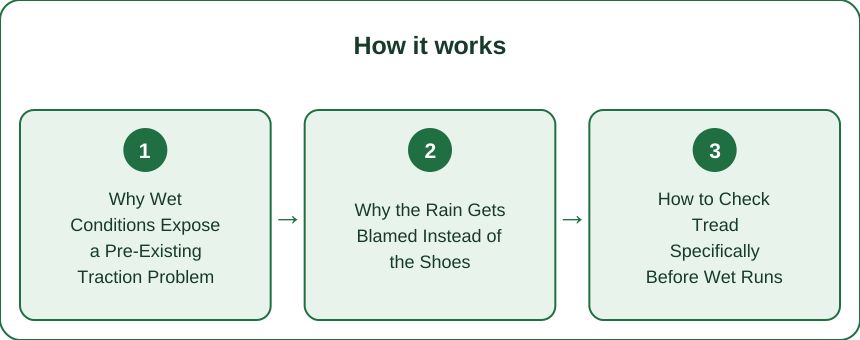
How Do You Check Your Shoes for Wet-Weather Traction?
Do this before a forecasted rainy run, not by recalling how they felt yesterday.
1. Look at tread depth. Turn the shoe over and compare the high-wear zones — usually the outer heel and the forefoot under the ball of the foot — against a low-wear zone like the arch area. If the grooves in the high-wear zones are noticeably shallower, or if you can see smooth patches where the pattern has flattened out entirely, that’s your answer. Smooth patches are the clearest signal.
2. Check for exposed midsole. If the white or colored foam is showing through the rubber anywhere, that section has zero water-channeling capability. This is a hard no for wet running.
3. Run a fingernail across the tread. It should catch on the pattern edges. If it slides smoothly, the edges are rounded off — and edges are much of what grips.
4. Track your mileage. Running shoes are commonly replaced somewhere in the 300–500 mile range, though it varies with your weight, gait, surface, and the shoe. If you don’t log mileage, a rough estimate from how long you’ve had them and how often you run is still better than nothing.
5. Compare against a new pair if you have one. Side by side, wear that was invisible in isolation becomes obvious.
Practical habits: keep a dedicated wet-weather pair if you run in rain often, and rotate two pairs so each gets 24+ hours to dry fully — wet foam compresses and recovers slowly, and running on still-damp shoes accelerates breakdown. Never dry them on a radiator; heat damages the adhesives and the foam.
Myth vs Fact
Myth: Running in the rain is inherently dangerous. Fact: With adequate tread it’s largely a comfort issue rather than a safety one. The elevated slip risk people associate with rain is mostly a shoe-condition problem being revealed, plus specific hazards like painted lines and metal covers.
Myth: If your shoes feel fine on dry runs, the tread is fine. Fact: Dry grip relies mainly on direct friction and works with a nearly smooth outsole. Wet grip requires tread to channel water away. Dry performance simply doesn’t test the function that wet conditions demand.
Myth: Waterproof shoes are the answer for rain running. Fact: Waterproofing addresses your feet getting wet, not the outsole’s grip on wet ground — a waterproof shoe with worn tread is exactly as slippery. It also traps sweat and water that gets in at the collar. Traction and water-resistance are separate properties.
Myth: The tread only matters on trails. Fact: Wet road surfaces — especially painted markings, manhole covers, and wooden boardwalks — are where most road runners actually slip, and they demand more from tread than dry asphalt does.
Myth: You can tell shoes are worn out by how they look on top. Fact: Uppers routinely outlast outsoles and midsoles. A shoe can look practically new while the tread is smooth and the cushioning is done. Always assess from the sole.
FAQ
How do you know when running shoes have lost their traction?
Look at the outsole in the high-wear zones — the outer heel and the forefoot. Smooth, flattened patches where the tread pattern has disappeared, or any spot where midsole foam is showing through, mean the shoe can no longer channel water. A fingernail dragged across the tread should catch on the pattern edges rather than sliding.
Is it safe to run in the rain?
Generally yes, with adequate tread and some route awareness. The main hazards are painted road markings, metal covers, wooden surfaces, and wet leaves, all of which are far slipperier than wet asphalt — shortening your stride slightly and avoiding those surfaces handles most of the risk. Visibility matters too, since drivers see you less well in rain.
How often should you replace running shoes?
Commonly cited guidance is 300–500 miles, though it varies with body weight, running surface, gait, and shoe construction. Rather than relying on mileage alone, inspect the outsole for smooth patches and exposed midsole — and if you run in wet conditions regularly, inspect more often, since that’s where worn tread actually matters.
TL;DR:
- Dry grip and wet grip work differently. Dry relies on direct friction; wet requires tread to channel water away.
- Worn tread feels completely fine on dry pavement and fails abruptly the moment the surface is wet.
- Rain doesn’t create the risk — it stress-tests a variable dry days never test.
- The rain gets blamed because it’s the thing that visibly changed. Dry runs generate no data, so nothing updates.
- Check before a wet run: smooth patches in the tread, exposed midsole foam, whether a fingernail catches on the pattern edges.
- Replace around 300–500 miles, but inspect the sole rather than trusting the mileage or the upper’s appearance.
- Rotate two pairs so shoes dry fully, and never dry them on a radiator.
- Watch the real hazards: painted lines, metal covers, boardwalks, wet leaves.
Keep Reading
This article is for general informational and styling purposes only. Fit, sizing, and product availability may vary.