Why Puddle Depth Costs You More Than Rainfall on a Run
Quick Answer: Rain wets your shoe from the outside and drains, but a puddle floods the shoe from below and saturates the midsole foam and the sock all at once. A saturated shoe is heavier, loses cushioning and stability, and holds water against your skin for the rest of the run - which is where blisters, and most rain-run discomfort, actually come from. Forty minutes of drizzle typically does less damage than one deep step.
Here is what a soaked shoe actually does, and how to manage a run once it happens.
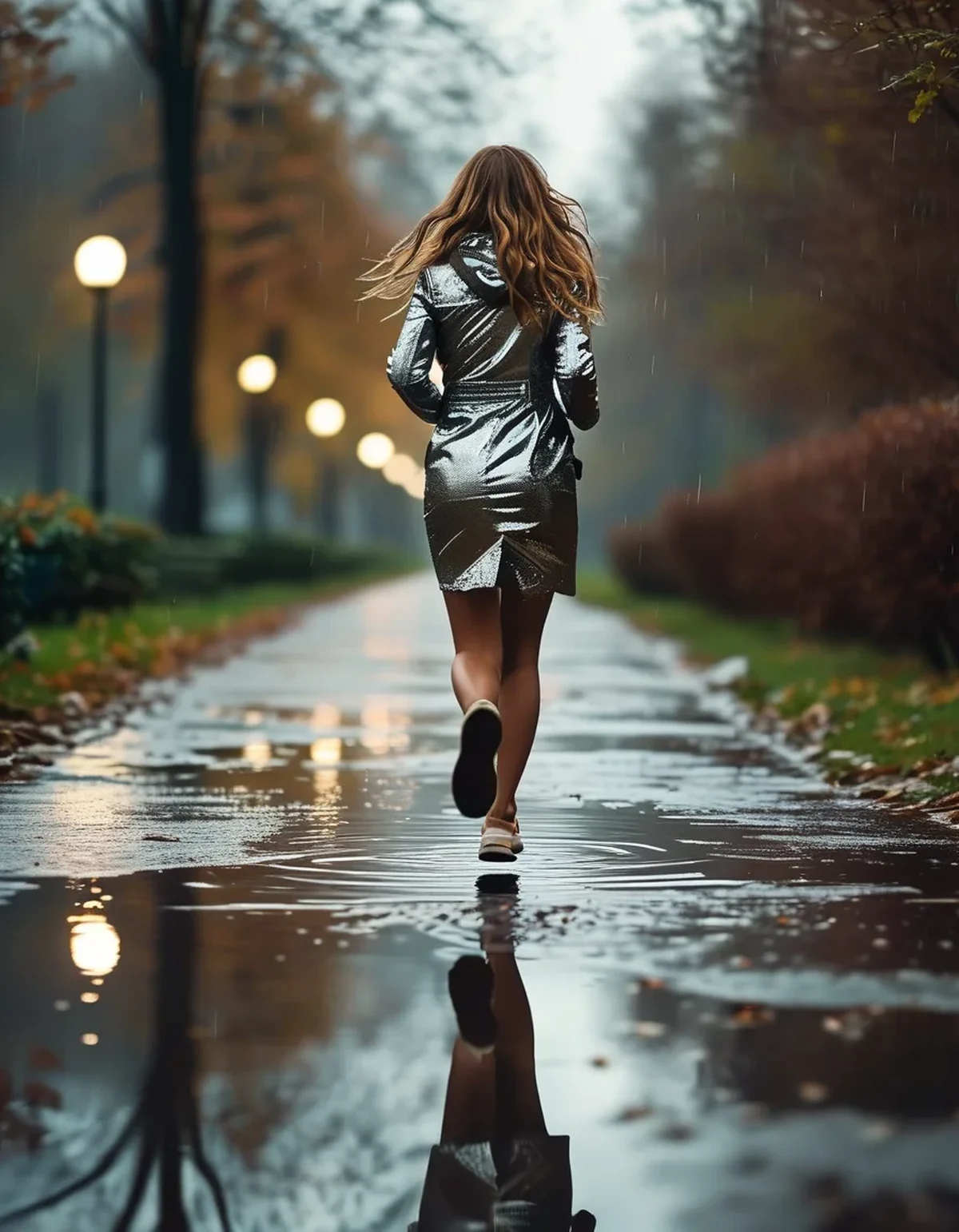
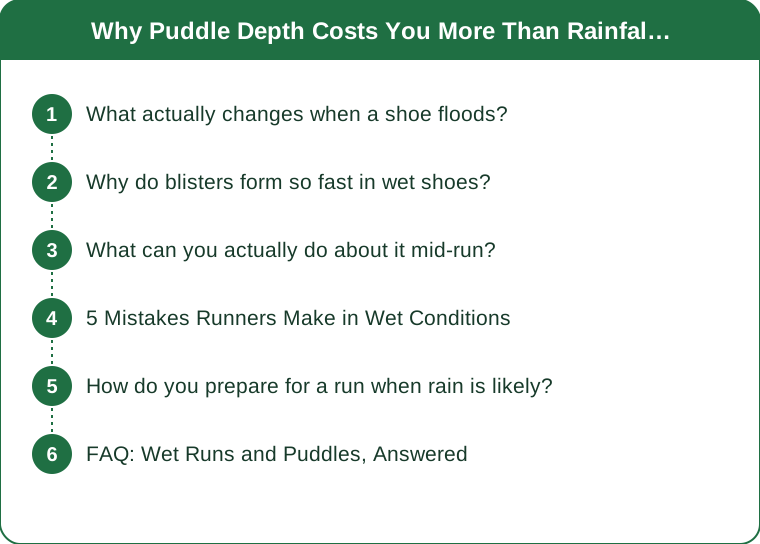
What actually changes when a shoe floods?
Four things, and they arrive within a minute.
Weight. A saturated running shoe can hold a substantial amount of water - enough to noticeably change how the shoe feels at the end of each swing phase. Over thousands of steps, that adds real work.
Cushioning changes. Midsole foam is a cellular structure, and water in those cells alters how the foam compresses and rebounds. Most runners describe a flat, dead feeling - and it is not imagination.
Grip changes, in both directions. The outsole is still working, but a wet insole means your foot slides slightly inside the shoe - and internal slippage is a bigger problem than external grip on most surfaces.
And your skin softens. This is the important one. Wet skin is markedly weaker than dry skin and its friction coefficient rises. Soft, wet skin plus internal movement is precisely the recipe for a blister, and it develops far faster than it would dry.
Rain, by contrast, mostly wets the upper. Modern mesh uppers drain reasonably well, and a light rain never fully saturates the sock and insole. Which is why the same amount of total water arriving from above is far less damaging than arriving from below in one go.
Why do blisters form so fast in wet shoes?
Because two of the three blister ingredients get worse at once.
Blisters need friction, pressure, and movement. A shear force repeatedly applied to skin separates its layers and fluid fills the gap.
Wet skin has higher friction than dry skin, not lower - which surprises people. Moderately damp skin is the worst case, with friction higher than either fully dry or fully saturated.
And wet skin is structurally weaker. The outer layer softens and becomes more easily damaged by the same shear force it would tolerate dry.
Meanwhile the shoe fits differently. A wet sock is slightly bulkier, a saturated shoe stretches, and both increase movement of the foot inside the shoe. More movement means more shear cycles.
The practical implication is timing. A blister that would take fifteen miles to form in dry conditions can form within two or three miles in wet ones, which is why people are so often caught out on a short wet run.
And light rain is genuinely worse than heavy rain in one respect: light rain produces damp skin rather than saturated skin, which is the higher-friction state. In a downpour your feet are past that point quickly.
What can you actually do about it mid-run?
Less than you would like, which is why avoidance matters.
Avoid the puddle if it is safe to do so. Obvious, and worth stating because people run straight through them for pace. A puddle of unknown depth is also a genuine ankle risk - it hides potholes, kerbs, and debris, and this is a more common cause of rain-run injury than slipping.
If you do get soaked, change your stride slightly. Shorten it a little and increase cadence. This reduces the shear force per step, and it is the only meaningful mid-run intervention available.
Re-tie the laces. A saturated shoe loosens as the upper stretches. Snugging the laces reduces internal movement, which directly reduces blister risk. Ten seconds, and it is the single most useful thing you can do after a soaking.
Do not stop and wring out the sock unless you can also dry your foot. Putting a damp sock back onto a wet foot in a wet shoe achieves nothing and costs you the warmth you had.
Accept the shortened run. If you are two miles into a long run and thoroughly soaked, the cost-benefit has changed. Finishing a session with a developing blister generally costs more days than cutting it short does.
And be alert to the first hot spot. A localised burning or hot sensation is the pre-blister stage. If you can address it - a plaster, adjusted lacing, or stopping - do it then, because once the blister forms the run is over either way.
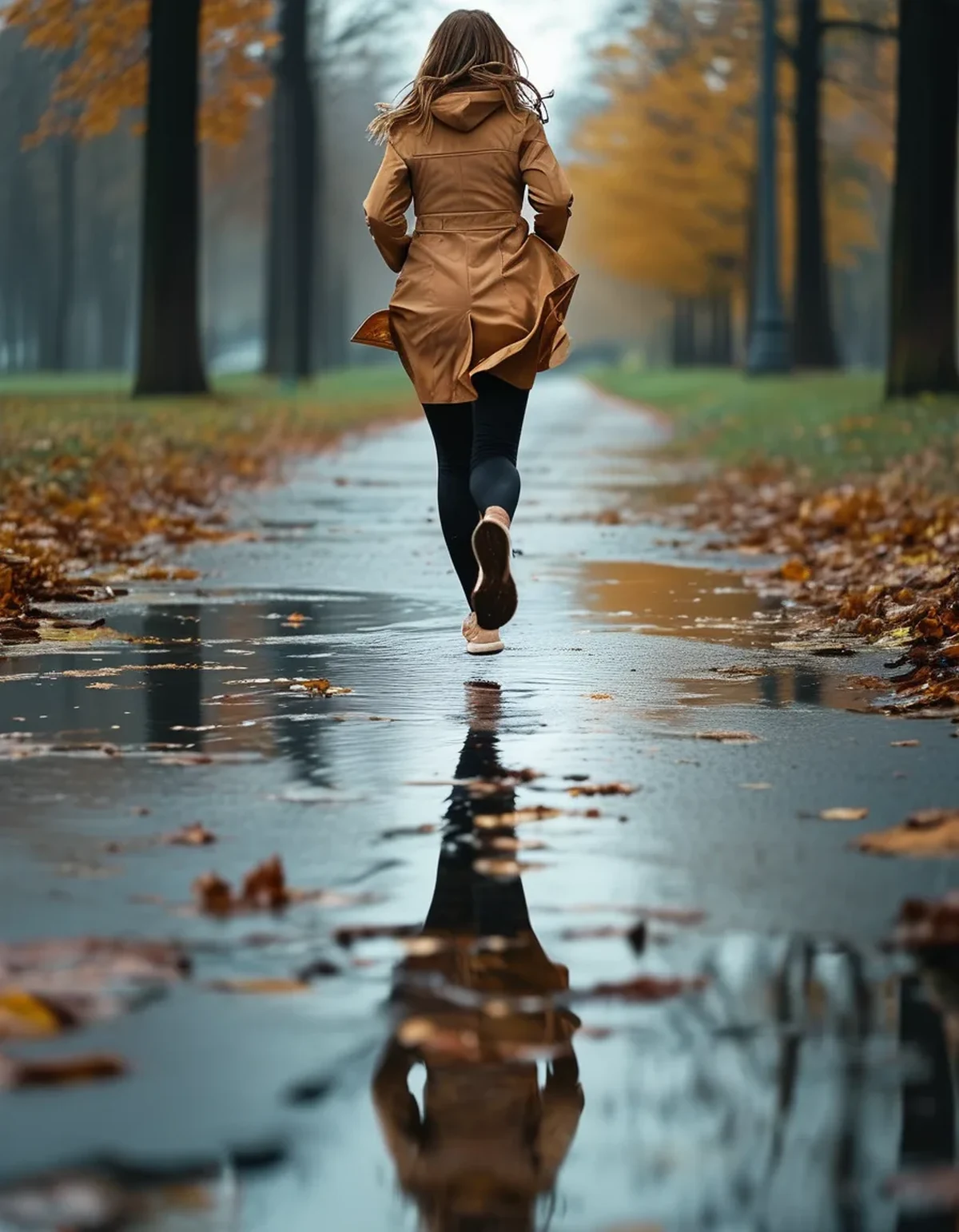
5 Mistakes Runners Make in Wet Conditions
1. Running straight through puddles for pace. The cost is not the wetness itself, it is hidden depth, hidden obstacles, and a shoe that stays saturated for the whole run. Two seconds of detour is cheaper than a blister or a rolled ankle.
2. Wearing cotton socks. Cotton absorbs and holds water against the skin and loses its structure when wet, which means more bunching and more movement. Technical or wool socks handle wet dramatically better - merino in particular retains some insulation and structure when wet.
3. Assuming waterproof shoes are the answer. Waterproof running shoes keep water out only until water gets in over the collar - and then they keep it in. For anything but very shallow conditions, a fast-draining mesh shoe outperforms a waterproof one. This is the single most common gear misunderstanding in wet running.
4. Drying shoes with direct heat. A radiator, a hairdryer, or a tumble dryer degrades the midsole foam and the adhesives and can permanently alter the shoe. Newspaper stuffed inside, at room temperature, with the insoles removed, is the correct method.
5. Wearing the same shoes the next day. A soaked shoe typically needs 24 to 48 hours to dry properly. Running in a still-damp shoe repeats the whole problem and is how a one-off soaking becomes a recurring blister.
The one that surprises people: the shoes are usually recoverable and the socks decide the run. A good technical or wool sock in a soaked shoe is far more comfortable than a cotton sock in a merely damp one - the sock is doing more work than the shoe.
How do you prepare for a run when rain is likely?
A short checklist that takes two minutes.
Wear technical or merino socks, always. The highest-value item in wet conditions and the cheapest.
Apply an anti-friction balm to blister-prone areas beforehand. Prevention works considerably better than treatment, and it takes thirty seconds.
Lace with a heel-lock. The extra eyelet at the top of the shoe. It reduces heel movement, which is where wet-run blisters most commonly form.
Choose the mesh shoe, not the waterproof one, unless conditions are genuinely shallow and cold.
Plan a route you know. Familiar ground means you know where the puddles pool and where the surfaces get slippery. The first rain after a dry spell is the most slippery, because accumulated oil and dust lift to the surface before washing away.
Take reflective gear and a light. Visibility drops far more in rain than people expect - spray, reduced contrast, and misted windscreens all reduce how well drivers see you, and this is the genuine safety issue in rain running.
And plan the aftermath before you leave: dry socks and shoes in the car or by the door, insoles out and shoes stuffed with newspaper as soon as you are back, and dry clothes ready. The recovery is what determines whether tomorrow’s run happens.
This is general information, not medical advice. See a healthcare professional for a blister that is deep, painful, discoloured, or shows signs of infection - and take particular care with foot injuries if you have diabetes or any condition affecting circulation or sensation in your feet.
FAQ: Wet Runs and Puddles, Answered
Why is one puddle worse than forty minutes of rain?
Rain wets the upper, which drains. A puddle floods the shoe from below and saturates the sock, insole, and midsole at once - and that water stays against your skin for the rest of the run.
Why do I blister so much faster in wet shoes?
Wet skin has higher friction than dry skin and is structurally weaker, while a saturated shoe stretches and lets your foot move more. More shear force applied to weaker skin means blisters form in a fraction of the usual distance.
Are waterproof running shoes worth it?
Usually not for running. They keep water out until it comes in over the collar, then keep it in. A fast-draining mesh shoe is generally the better choice except in shallow, cold conditions.
What should I do immediately after soaking my shoes mid-run?
Re-tie the laces - a saturated shoe loosens as it stretches, and tightening reduces the internal movement that causes blisters. Shorten your stride slightly, and address any hot spot before it becomes a blister.
How should I dry running shoes?
Remove the insoles, stuff with newspaper, and dry at room temperature with good airflow - allowing 24 to 48 hours. Never use direct heat, which degrades midsole foam and adhesives.
Does sock material really matter that much?
More than the shoe, in wet conditions. Cotton absorbs water, holds it against the skin, and loses structure. Technical or merino socks keep their shape and are far more comfortable wet.
Is light rain really worse than heavy rain for blisters?
In one specific way, yes. Light rain produces damp skin, which has higher friction than either dry or fully saturated skin. In a downpour your feet pass through that state quickly.
TL;DR:
- Rain wets the upper, which drains. A puddle floods the shoe from below and saturates sock, insole, and midsole at once.
- A saturated shoe is heavier, flatter underfoot, and lets your foot slide internally - and that internal movement is what causes blisters.
- Wet skin has higher friction and is structurally weaker, so a blister that takes fifteen miles dry can form in two or three wet.
- Mid-run: re-tie the laces (the shoe stretches and loosens), shorten your stride slightly, and act on the first hot spot.
- Waterproof running shoes usually make it worse - they hold water in once it enters. Fast-draining mesh is generally better.
- Socks matter more than shoes when wet: technical or merino, never cotton.
- Dry shoes with insoles out, newspaper inside, room temperature, 24 to 48 hours. Never direct heat.
The first rain after a dry spell is the most slippery, and visibility drops more than most runners expect - take a light.
This is general information, not medical advice.
Keep Reading
This article is for general informational and styling purposes only. Fit, sizing, and product availability may vary.