The Run After the Rain: Why Post-Storm Surfaces Are Trickier Than Running in It
Quick Answer: The post-rain run has a different hazard map than the mid-rain one: painted road markings and metal covers become skating rinks when wet, wet leaves hide slick films (and the curbs beneath them), the first rain after a dry spell floats accumulated road oil to the surface, and shaded stretches stay slippery hours after sunny ones dry. The skill is surface-reading — shortened strides over the shiny stuff, feet under your hips, and route edits that trade painted crosswalks and leaf-drifts for grippy asphalt.
Rain-run advice obsesses over the water falling on you — gear, chafe, visibility — and skips the water already down. But ask any runner where they actually slipped: it’s almost never mid-downpour. It’s the gleaming crosswalk paint two hours after the sky cleared.

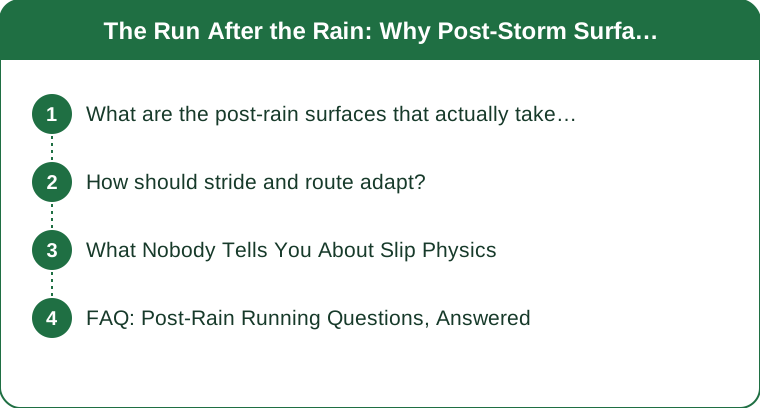
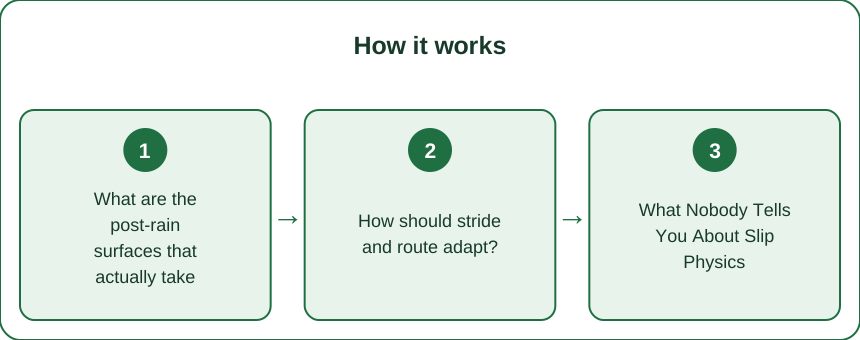
What are the post-rain surfaces that actually take runners down?
The hazard ranking, worst first:
- Painted surfaces: crosswalk stripes, bike-lane markings, parking-lot arrows — thermoplastic road paint wet is among the slickest surfaces in the built environment, and crossings force you onto it exactly where you’re also watching traffic. One wet painted line under a turning foot is the classic urban runner slip.
- Metal anything: manhole covers, grates, utility plates, bridge expansion joints — zero absorbency, instant glaze. Small enough to hop or stride around once you’re scanning for them.
- Wet leaves: a double hazard — the leaf film itself is slick (wet leaves approach ice-like friction on smooth stone), and drifts conceal what’s beneath: curb edges, potholes, more paint. Autumn’s post-rain leaf-drifts deserve full detours, not brave lines through.
- First-rain oil slicks: after 1-2+ dry weeks, the initial rain lifts accumulated vehicle oil into a surface film — roads are at their slickest in the first hours of rain-after-drought, with the rainbow sheen on puddle edges as the visible tell.
- Shade-line physics: hours after sun dries the open stretches, tree-shadowed and building-shadowed segments stay wet — the surprise comes from transition: dry-confident stride meeting the still-wet shade patch mid-block.
How should stride and route adapt?
The stride toolkit (deploy over anything shiny):
- Shorten and quicken: more steps, less per-step commitment — landing with your foot under your hips rather than reaching ahead, which keeps weight over the contact and cuts the slip-lever a heel-strike-out-front creates.
- Flatten the foot: on suspect surfaces, a flatter mid-foot contact spreads pressure versus a heel-first strike on a slick spot.
- No push-off theatrics on corners: turn with upright posture and small steps — the combined ask of turning + pushing off + wet paint is the full slip recipe; remove one ingredient.
- Downhills get the biggest edit: braking forces on wet descents multiply every hazard — shorten stride dramatically and let cadence, not stride length, manage speed.
The route edit: favor rough asphalt (best wet grip in the urban menu) over smooth concrete, stone, or brick; cross streets at unpainted stretches where legal-and-safe options exist; swap the leafy park lane for the open path in the post-rain hours; and time trail runs a day later — wet roots and rock are a genuinely different sport. The prettiest post-rain routes and the grippiest ones are rarely the same map; for the first hours, run the grippy one.

What Nobody Tells You About Slip Physics
The counterintuitive core: slips happen at transitions, not on the obviously-bad stuff. Runners navigate a clearly-treacherous surface with automatic caution — short steps, alert posture — then slip on the edge where bad meets good, because the body recalibrates to ‘safe’ one step early. The discipline is holding the careful gait for a few strides past where the hazard seems to end.
Second unadvertised truth: your shoes’ wet grip is a spec you already own knowledge of. Road shoes vary widely — outsoles with softer rubber and actual tread pattern grip wet pavement dramatically better than worn-slick racers. The pre-run 10-second check: if your outsole’s tread is polished flat at the forefoot, that shoe has opinions about wet paint you don’t want expressed mid-corner. Rotate the grippier pair on post-rain days.
And the fall-craft nobody teaches: if a slip goes past saving, the practiced move is going with it — bending into the fall, aiming for the padded side (glute/thigh), arms bent rather than stiff-armed out (the straight-arm catch is the classic wrist injury). One second of accepted fall beats a fought one. Any fall with real impact, or pain that persists, gets checked — momentum-fueled slips deserve respect. This is general information, not medical advice.
FAQ: Post-Rain Running Questions, Answered
How long after rain until surfaces are trustworthy?
Open sunny pavement: often 1-3 hours in decent weather. The long tail belongs to shade lines, leaf cover, and metal (until actively dry) — the practical rule is ‘sun-dried where you can see, suspicious where you can’t.’ First-rain-after-drought oil films need a proper rinse: that hazard improves with more rain, oddly.
Are trail runs better or worse after rain?
Usually worse, for longer: wet roots and rock stay slick for a day-plus, mud disguises depth, and grip demands climb across the board. The day-after trail run is a legitimate skill session for experienced trail runners and an ankle lottery for road runners visiting — timing it a day later converts most of the risk to mud alone.
Do gaiters, poles, or traction devices help?
For road post-rain: no — stride and route craft carry it. Traction devices are ice tools; on wet pavement they can reduce grip. Trail context differs (poles genuinely help wet descents). The equipment answer for roads is almost boring: the shoe with actual tread, chosen that morning.
TL;DR:
- The post-rain hazard map: painted lines, metal covers, leaf-drifts (and what they hide), first-rain oil films, and shade lines that dry last
- Stride craft: shorter/quicker, foot under hips, flat contact on shiny stuff, radical downhill respect — and hold caution a few strides past each hazard’s edge
- Route craft: rough asphalt over smooth stone, unpainted crossings, open paths over leafy lanes, trails a day later
- Slips live at transitions; your grippiest shoes and a practiced soft fall are the insurance
The storm was never the risky part — the gleam it left behind is, and now you can read it. This is general information, not medical advice.
Keep Reading
This article is for general informational and styling purposes only. Fit, sizing, and product availability may vary.