The Rain-Running Danger That Has Nothing to Do With Slipping
Quick Answer: Rain significantly reduces driver visibility through fogged or streaked windshields and lower ambient light, making a runner in dark, non-reflective clothing far harder to spot than on a dry, bright day — reflective or high-visibility gear matters more in rain than almost any other running condition.
Slipping is the risk most people think about in the rain, but the harder-to-notice danger is simply not being seen by the cars sharing the road.

Why does rain specifically reduce driver visibility so much?
Rain reduces ambient light, often coincides with overcast skies, and causes windshield fogging or streaking that further degrades a driver’s ability to spot pedestrians and runners at the roadside.
A runner who’s easily visible on a clear day in the same clothing can become genuinely hard to spot under these combined conditions, especially at dawn, dusk, or in heavier rain.
What actually helps the most for visibility in the rain?
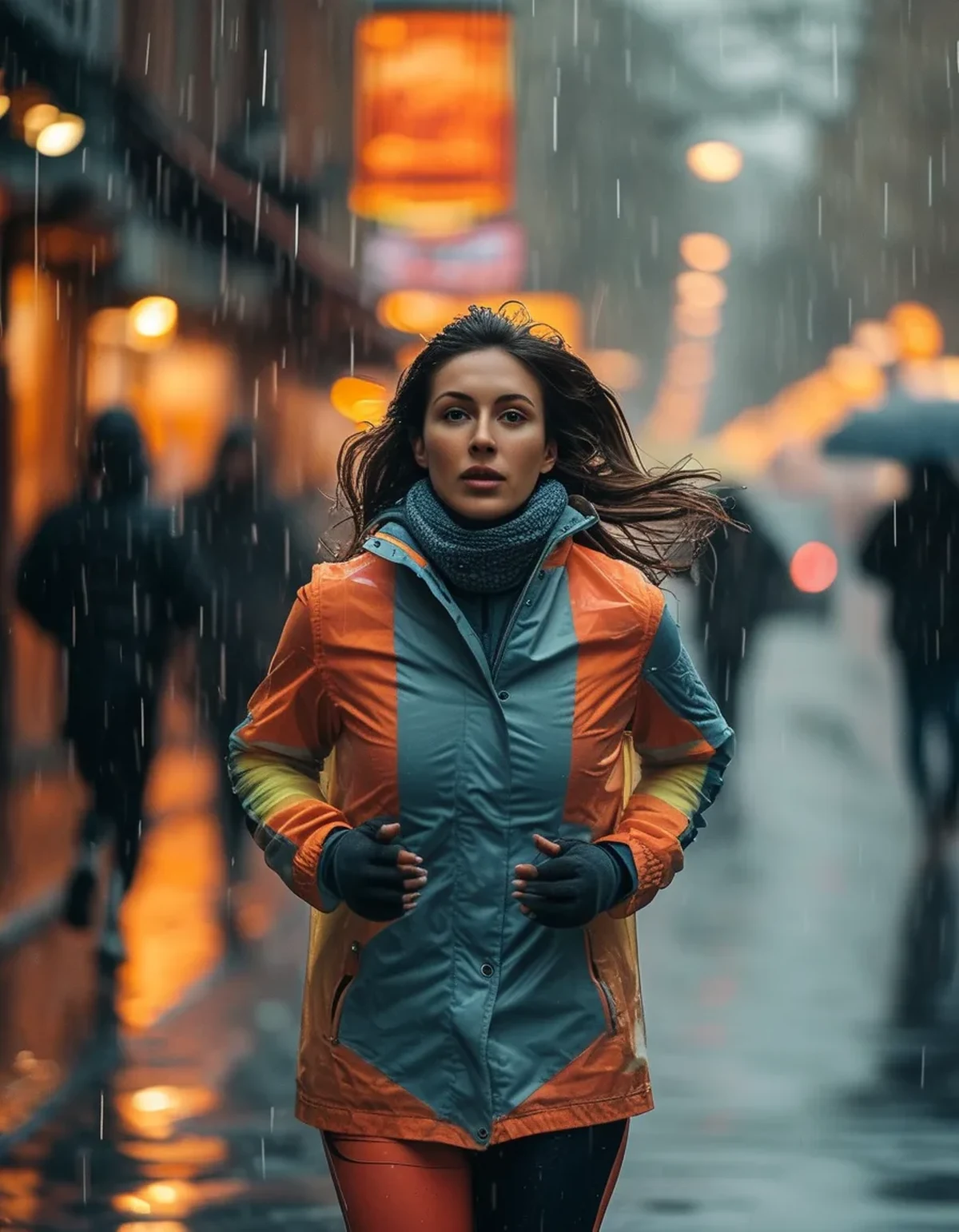
A high-visibility or reflective jacket, ideally with reflective elements at moving points like the ankles and wrists, catches headlights and streetlights far more effectively than a plain colored jacket.
Running against traffic where legally applicable, so you can see and react to approaching vehicles, adds another layer of safety on top of visibility gear alone.
Myth vs Fact: Rain Running Visibility
Myth: a bright-colored jacket is enough on its own. Fact: bright color helps in daylight but does little in low-light rain conditions — reflective elements, not just color, are what actually catch headlights.
Myth: rain-running risk is mainly about the runner slipping. Fact: reduced driver visibility is a comparably serious, and less obvious, risk factor that visibility-focused runners often overlook entirely.
Does route choice matter as much as gear?
Choosing routes with sidewalks or wide shoulders, away from high-speed traffic, reduces exposure regardless of how good visibility gear is.
In genuinely heavy rain or low-visibility conditions, moving a run to a treadmill or indoor track is a reasonable call rather than treating gear as a complete substitute for route and timing choices.
FAQ: Rain Running Safety Questions, Answered
Do headlamps help for rain running, or just reflective gear?
A headlamp adds forward visibility for you and additional visibility to drivers, especially useful during darker, low-light rainy conditions.
Is running against traffic actually safer in the rain?
In most cases yes, since it lets you see and react to vehicles rather than being approached from behind, though local traffic laws should be checked.
Should I skip a run entirely in heavy rain?
Heavy rain combined with low visibility and high traffic is a reasonable time to move indoors — safety trumps sticking to an outdoor schedule.
TL;DR:
- Reduced driver visibility, not just slipping, is a major and underrated rain-running risk
- Reflective gear, not just bright color, is what actually helps drivers spot you
- Route choice (sidewalks, low-traffic roads) matters as much as gear
- Heavy rain with poor visibility is a reasonable reason to move a run indoors
Pack the reflective jacket before the next rainy run — visibility protects you in ways slip-resistant shoes alone can’t.
Keep Reading
This article is for general informational and styling purposes only. Fit, sizing, and product availability may vary.