Is Running in the Rain Actually More Dangerous? Here's the Real Risk
Quick Answer: Rain itself rarely causes injury — the real risks are painted surfaces, leaf-covered turns, and worn-out shoe tread, all of which become dramatically more slippery when wet. Fix those three and rain running is close to as safe as dry running.
Everyone treats rain running like it’s inherently risky, but the water falling on you isn’t what twists an ankle. The actual danger is hiding in specific surfaces most runners never think to check before a wet run.

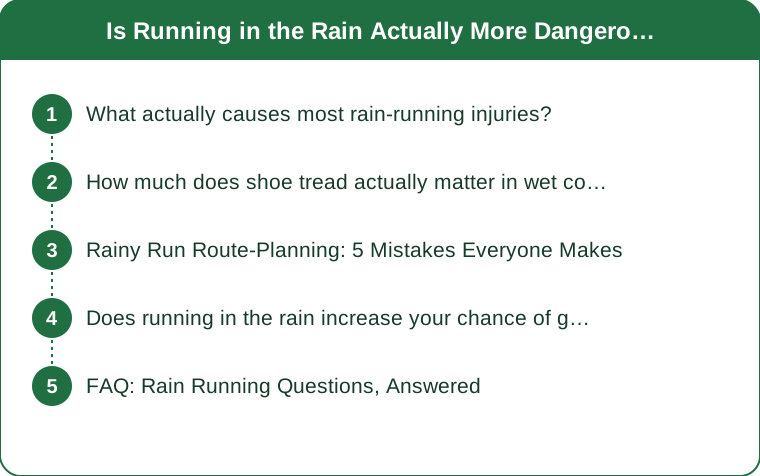
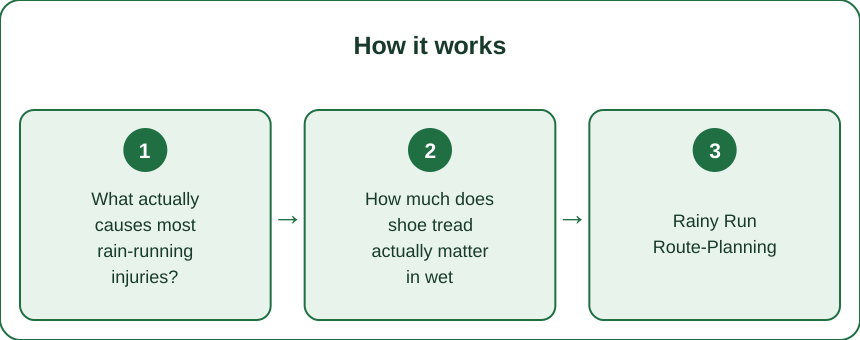
What actually causes most rain-running injuries?
Surface, not water. Three surface types turn dangerous specifically when wet: painted road markings and crosswalks (paint is essentially a plastic film — traction can drop by more than half when wet), wet leaves or organic debris (creates a slick layer even over dry-gripping asphalt), and worn shoe tread (tread depth under roughly 2mm loses most of its water-channeling ability).
A runner on fresh tread avoiding painted lines and leaf piles faces barely more risk in rain than in dry conditions.
How much does shoe tread actually matter in wet conditions?
More than most runners assume. Tread grooves exist specifically to channel water away from the contact surface — without them, you get hydroplaning at a micro scale, the same principle as bald car tires.
Check your tread by comparing the pattern at the ball of your foot to the outsole edge. If the pattern’s gone smooth in the high-wear zone, wet-weather grip is the first thing to fail, well before the shoe feels ‘worn out’ for dry running.

Rainy Run Route-Planning: 5 Mistakes Everyone Makes
1. Taking the same route as dry days. That downtown crosswalk-heavy route is now your riskiest option — reroute toward textured surfaces.
2. Trusting a bike path over a sidewalk. Painted bike lane lines are some of the slickest markings out there.
3. Ignoring camber. Road edges shed water into a thin sheet exactly where runners drift — stay centered on sidewalks when possible.
4. Sprinting the final stretch. Wet-surface grip loss shows up disproportionately at speed and on turns, not on straight easy-pace running.
5. Skipping a gear check. Cotton socks blister faster wet; a $12 pair of moisture-wicking socks changes the whole run.
Does running in the rain increase your chance of getting sick?
Being wet and cold for an extended time can stress your system, but rain itself isn’t the mechanism — prolonged chill after the run is. Change out of wet clothes within 15-20 minutes of finishing, especially in cooler weather, and the sick-risk myth mostly evaporates.
If you have any pre-existing respiratory condition, cold rain can be a legitimate trigger — that’s worth a conversation with your doctor before you make wet running a habit.
FAQ: Rain Running Questions, Answered
Should I slow down when running in the rain?
Yes, especially on turns and unfamiliar routes — a 10-15% pace reduction is a reasonable default until you know how your specific shoes handle the specific surface.
Do I need special shoes for running in the rain?
Not dedicated ‘rain shoes,’ but fresh tread matters more than usual. If your current pair is due for replacement, wet season is when that shows up first.
Is it bad to run in a thunderstorm?
This one’s a genuine safety issue, not a myth — lightning risk is real. Postpone or move indoors during active thunder and lightning, no exceptions.
TL;DR:
- Rain itself rarely causes injury — painted lines, wet leaves, and worn tread do
- Check tread depth before wet season; smooth tread loses grip first in rain
- Reroute away from crosswalk-heavy paths; stay centered, avoid camber
- Change out of wet clothes within 20 minutes; skip runs during actual thunderstorms
Respect the specific hazards, not the rain itself, and wet running stays safe.
Keep Reading
This article is for general informational and styling purposes only. Fit, sizing, and product availability may vary.